 7.8/10
Drag-and-drop WordPress website builder with a free plugin, Editor Pro plans, the Elementor One bundle and managed hosting.


Free, open-source Hugo kit for building academic, portfolio, blog and docs sites from Markdown blocks, with optional AI help.
We may earn a commission when you buy through our links. How this works
HugoBlox suits researchers, developers and technical writers who want a fast site they own as Markdown in Git. Non-technical business owners who want hosting and drag-and-drop editing handled for them should skip it.
Best for: Researchers and developers who want a site they own in Git


7.3/10 Good, with trade-offs. The overall score is our judgment against the questions we ask of every tool, not an average. How we score
| Question | Score | Why |
|---|---|---|
| Does the jobWhat it actually does for the task it is sold for, and where it falls short. | 7.8 | Nine free templates, block-based pages and BibTeX, LaTeX and Jupyter support cover academic, docs and portfolio sites, per hugoblox.com. |
| Ease of useSetup needed and how quickly you get something useful done. | 6.2 | Editing is through Markdown, YAML, VS Code or AI chat, and v0.11 required a full migration, per the GitHub release notes. |
| Pricing and limitsWhat you pay at a realistic size, including caps, add-ons and deal limits. | 8.6 | The MIT framework is free with unlimited sites, and AI plans start at $9 a month billed annually. |
| Reliability and supportUpdate pace, known problems and how support responds. | 6.5 | Free users get community Discord support only; priority support is limited to the Max plan. |
| Fit against alternativesHow it compares with the alternatives for the people it is aimed at. | 7.4 | A strong pick against Jekyll and Quarto for academic sites, but not a substitute for hosted business website builders. |
HugoBlox is a free, open-source page-building kit for the Hugo static site generator: you stack ready-made blocks, write content in Markdown, and deploy a fast site that lives in your own Git repository, with optional paid AI help from its Hugo Chat assistant.
It is the project formerly known as Wowchemy (and before that the Hugo Academic theme), run by the same team since 2016. HugoBlox is a trademark of Lore Labs, which also makes the Ownable CMS extension for VS Code. The kit is MIT licensed, and its GitHub repository showed about 9.8k stars and 2.9k forks when checked.
HugoBlox is built for people who are happy to own their site as files. Its templates target researchers and lab heads, technical writers, developer advocates, consultants, founders and indie hackers. The academic CV template is the best known: publications import from BibTeX with DOI and arXiv links, and it renders LaTeX math and Jupyter notebooks. The vendor says the template has been used by researchers at NVIDIA Research, Stanford, MIT and Imperial College.
Skip it if you want a drag-and-drop builder with hosting, forms and ecommerce handled for you. HugoBlox gives you a static site, so you deploy it to GitHub Pages, Netlify or Vercel yourself (or use a managed host), and you edit through Markdown files, VS Code or the AI chat. Non-technical small business owners will usually be happier with a hosted website builder.
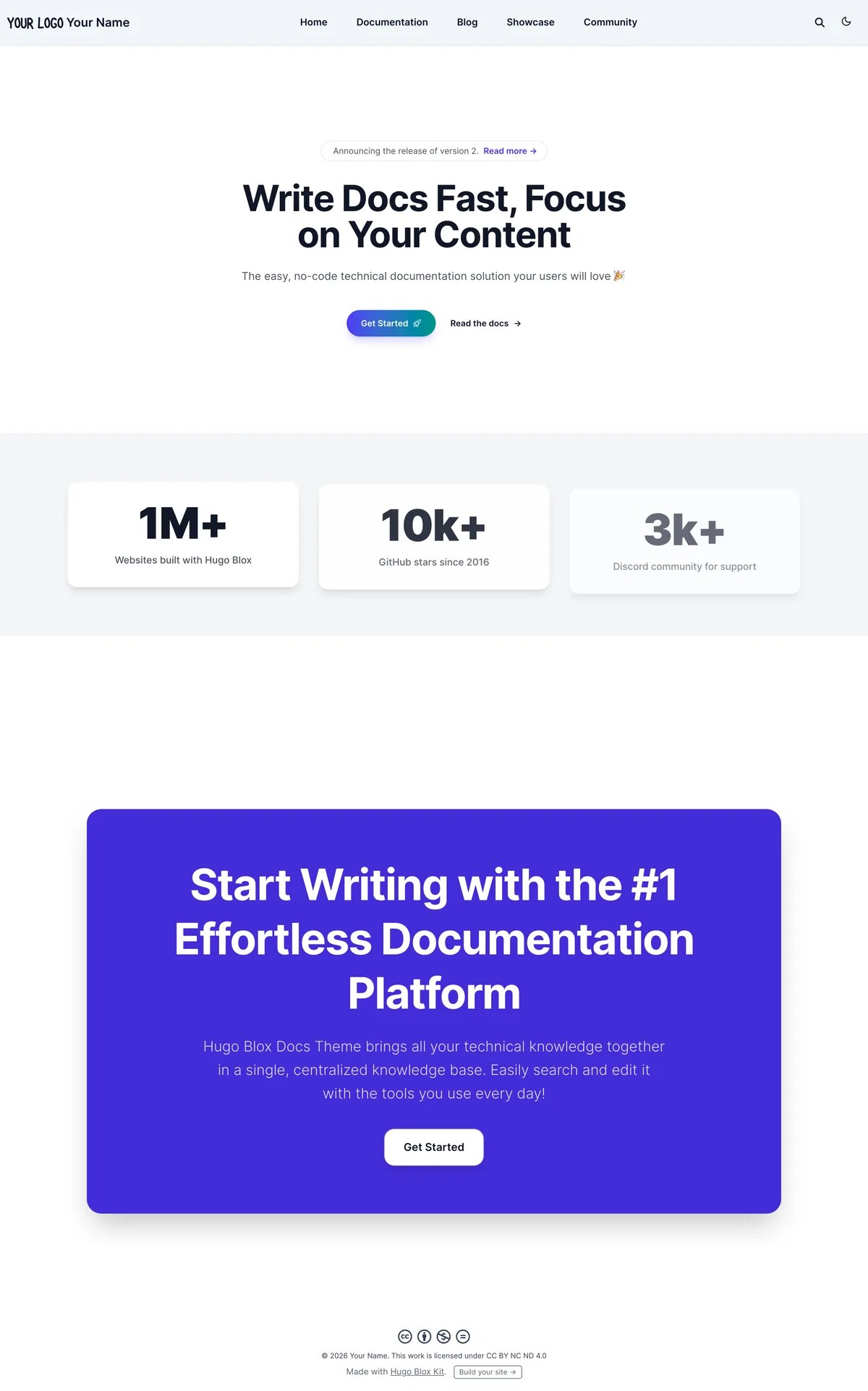
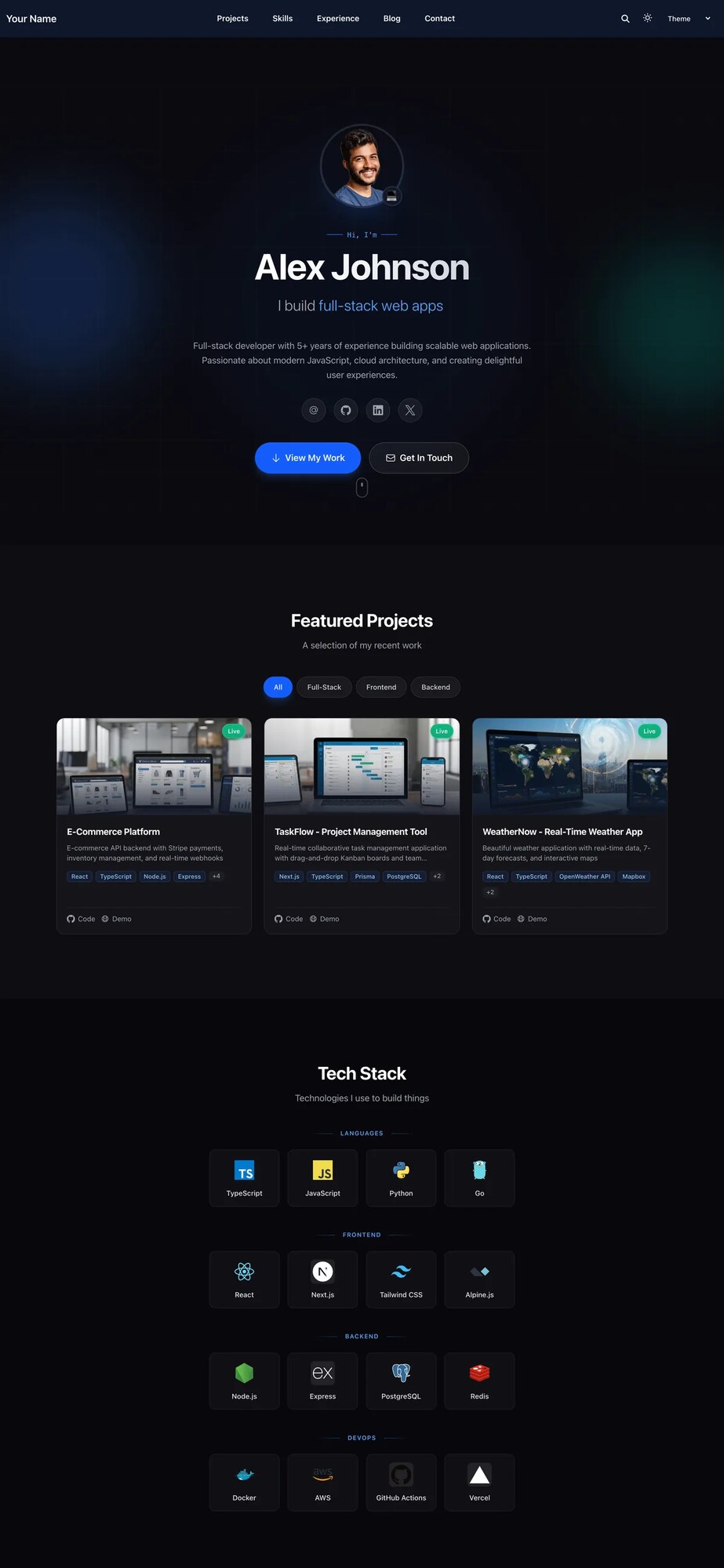
The template gallery lists nine first-party templates, all free and MIT licensed: Documentation, Developer Portfolio, SaaS Landing Page, Markdown Slides, Link in Bio, Online Resume, Technical Blog, Academic CV and a blank Starter. Clicking Deploy creates a GitHub repository you own (no fork needed). Pages are built from blocks defined in front matter, such as a hero, features, stats, testimonials, a portfolio grid or a tech stack section, so you change the layout by editing YAML rather than HTML.
Hugo Chat is the optional AI layer. In chat mode it answers Hugo and HugoBlox questions with cited answers from the official docs and can read your connected GitHub repos. Build mode generates full pages, posts and themes from a plain English brief, and paid plans can push the edits straight to your repo. The pricing page says HugoBlox never trains AI models on your prompts or site content.
Ownable CMS (the successor to HugoBlox Studio) is a VS Code extension for visual editing: a content list with an Idea, Draft, Review and Published workflow, a media library with drag-and-drop uploads, and a local Hugo dev server preview. The Visual Studio Marketplace listing showed 1,672 installs and a single rating when checked.
A HugoBlox CLI and a GitHub Action can open upgrade pull requests for you. The team says the move from Bootstrap to a Tailwind-based design system made pages up to three times faster to load. Those are its own figures, but static Hugo output is generally fast.
Prices checked 31 Oct 2026 on hugoblox.com, in US dollars, excluding tax. The framework is free; the paid plans are for Hugo Chat AI.
| Plan | Monthly | Billed annually | What it includes |
|---|---|---|---|
| Free OSS | $0 | $0 | Full MIT framework, unlimited self-hosted sites, limited daily Hugo Chat help, a Build mode trial with no card, community Discord support |
| Plus | $12 a month | $9 a month ($108 a year) | Unlimited chat, standard Build allowance, image and file attachments, public sharing of conversations |
| Pro | $25 a month | $20 a month ($240 a year) | Everything in Plus, frontier AI models with Thinking, higher Build allowance, push edits to GitHub from chat |
| Max | $60 a month | $50 a month ($600 a year) | Everything in Pro, twice the Pro Build allowance, larger attachments and commits, priority support |
| Team | $40 per seat a month | $32 per seat a month ($384 per seat a year) | Everything in Pro for each member, a pooled Build allowance, admin controls and member management |
HugoBlox does not publish the exact Build allowances on the pricing page; it says they are shown in the in-app usage dashboard, and you can top up at any time. You can cancel in one click from the billing page, and existing subscribers keep their original price while the subscription stays active. Checkout runs through Stripe, and tax exemption is supported for universities, research labs and nonprofits. For academics who would rather not run anything themselves, the template pages point to PubPilot, a managed hosting service from $19 a month.
A researcher who deploys the Academic CV template to GitHub Pages and edits it in Markdown pays nothing. Someone who wants AI to draft pages and push them to GitHub needs Pro, which is $240 a year billed annually. A five-person lab or agency on Team pays $1,920 a year on annual billing, or $200 a month on monthly billing. Hosting on GitHub Pages, Netlify or Vercel can be free on those services' own plans, so the AI subscription is often the only cost.
The site advertises a 4.9 rating and 150K+ sites built without naming a review platform, so I would treat both as the vendor's claims. The clearest independent signal is adoption: the GitHub repository's roughly 9.8k stars and 2.9k forks, plus a contributor list that runs into the dozens. The Ownable CMS extension had only one rating on the Visual Studio Marketplace when checked, too few to judge.
HugoBlox is one of the most established ways to build an academic or developer website on Hugo, and the free MIT framework is genuinely complete. The AI plans are fairly priced add-ons for people who want help writing pages, not a requirement. I would pick it for a research, portfolio or docs site you want to own outright. If you just want a business website without touching Git, a hosted builder will save you time.
Yes. The framework and every first-party template are MIT licensed and free to use, including commercially. Only the optional Hugo Chat AI plans cost money, from $12 a month or $9 a month billed annually.
Yes. Wowchemy was renamed HugoBlox; it is the same project and team since 2016, and the Hugo Academic template is the direct successor to the Wowchemy Academic CV.
Not deeply, but you should be comfortable editing Markdown and simple YAML. Hugo Chat and the Ownable CMS extension for VS Code reduce the amount of manual editing.
Anywhere that serves static files. HugoBlox highlights one-click deploys to GitHub Pages, Netlify and Vercel, and points academics who want managed hosting to PubPilot.
Hugo Chat is HugoBlox's AI assistant. It answers Hugo questions with cited docs and, in Build mode, generates pages, posts and themes and can push them to your GitHub repo on Pro and above.
We may earn a commission when you buy through links on SaaSPic. It never changes our verdicts or the price you pay. Affiliate disclosure
Add this badge to your website so your visitors can read this independent review in one click.
 7.8/10
Drag-and-drop WordPress website builder with a free plugin, Editor Pro plans, the Elementor One bundle and managed hosting.
 7.7/10
Membership platform that adds logins, Stripe payments, gated content and member data to Webflow, WordPress and custom sites.
 7.2/10
AI website, landing page and funnel builder from Onepage, with a visual editor, CRM, EU hosting and a separate forms and funnels add-on.