 7.6/10
AI academic writing tool with grammar, plagiarism, AI detection, citation and research features for students and researchers.


AI academic writing assistant with source-grounded autocomplete, traceable citations and a research library.
Compared: Jenni AI vs Paperpal, which academic writing tool for research
We may earn a commission when you buy through our links. How this works
Jenni AI suits students and researchers who write papers regularly and want AI help that stays tied to their own sources and citations. Skip it if you need a general AI writer, or if you only need it for a month and do not want to pay the high monthly price.
Best for: Students and researchers writing cited papers
7.4/10 Good, with trade-offs. The overall score is our judgment against the questions we ask of every tool, not an average. How we score
| Question | Score | Why |
|---|---|---|
| Does the jobWhat it actually does for the task it is sold for, and where it falls short. | 8.0 | Autocomplete can draw only from your own library, citations link to the exact paragraph in the source PDF, and Reviews flags unsupported claims. |
| Pricing and limitsWhat you pay at a realistic size, including caps, add-ons and deal limits. | 6.0 | Annual billing is $12 for Plus and $29 for Pro, but monthly is $30 and $73, and the free plan allows 10 autocompletes a day. |
| Reliability and supportUpdate pace, known problems and how support responds. | 6.5 | Recent Trustpilot reviews are mostly positive about support, but more than one reviewer said an annual plan renewed or changed without notice. |
| Fit against alternativesHow it compares with the alternatives for the people it is aimed at. | 7.5 | Built for source-grounded academic writing with Zotero and Mendeley import, and it is the wrong fit for general marketing or blog writing. |
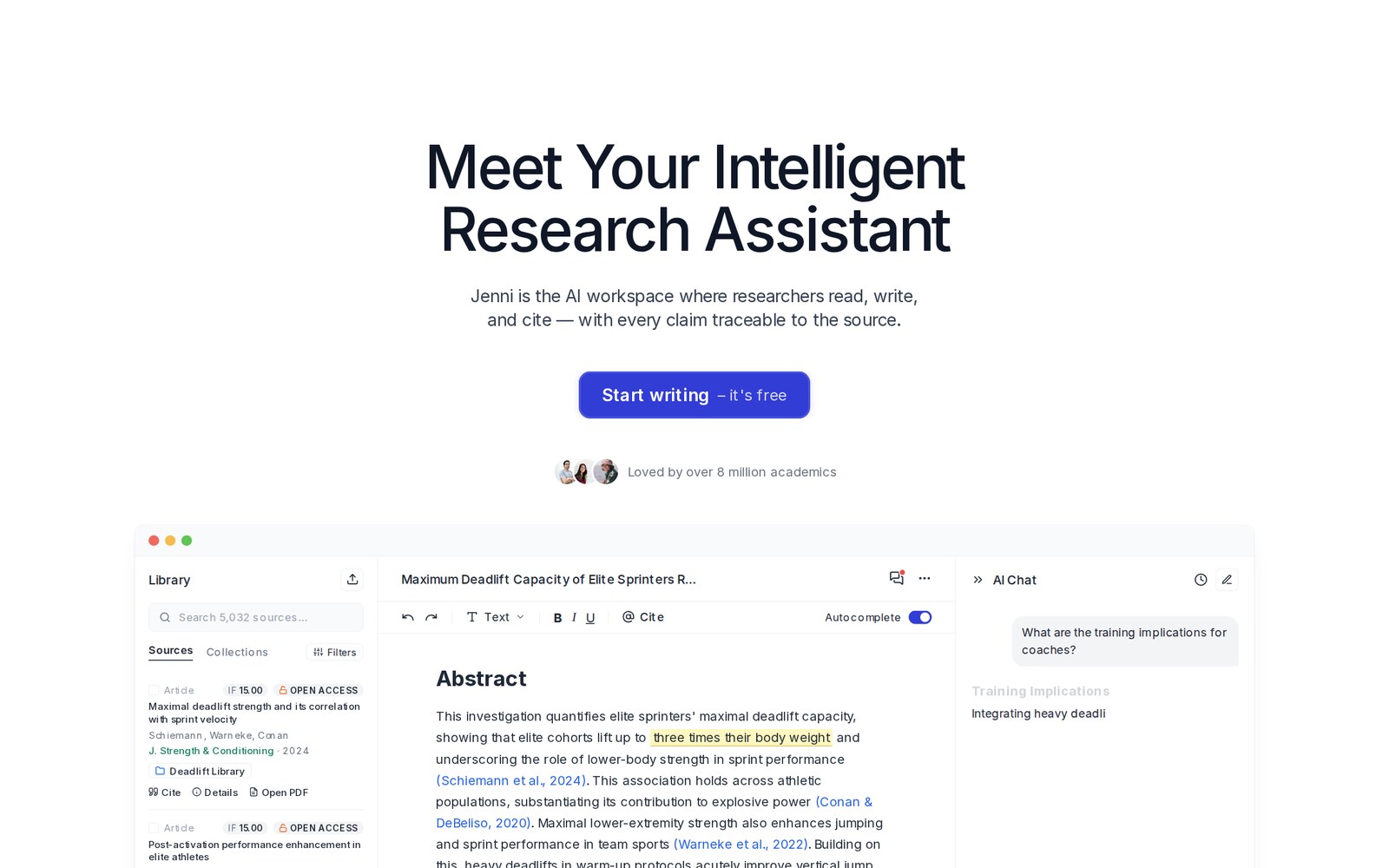
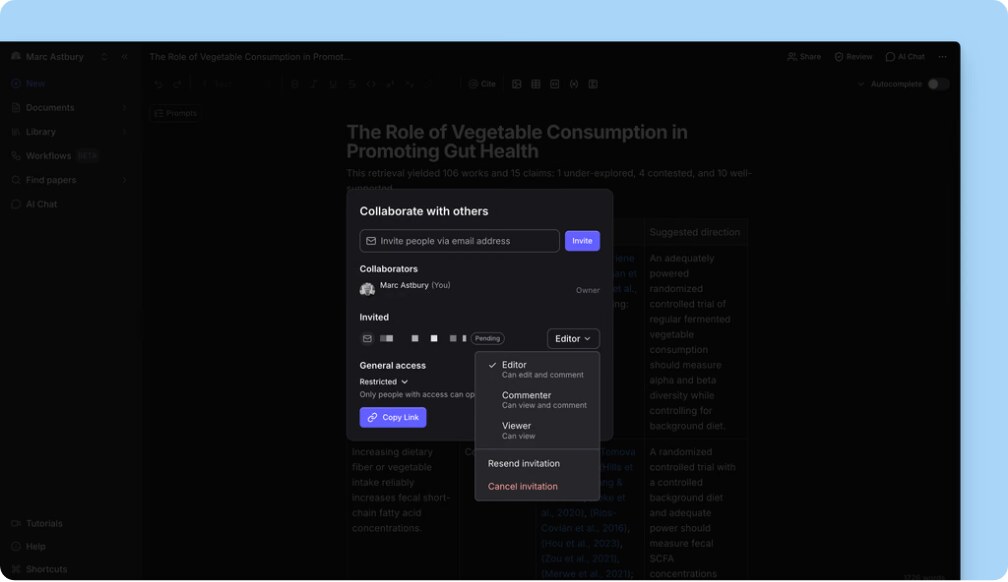
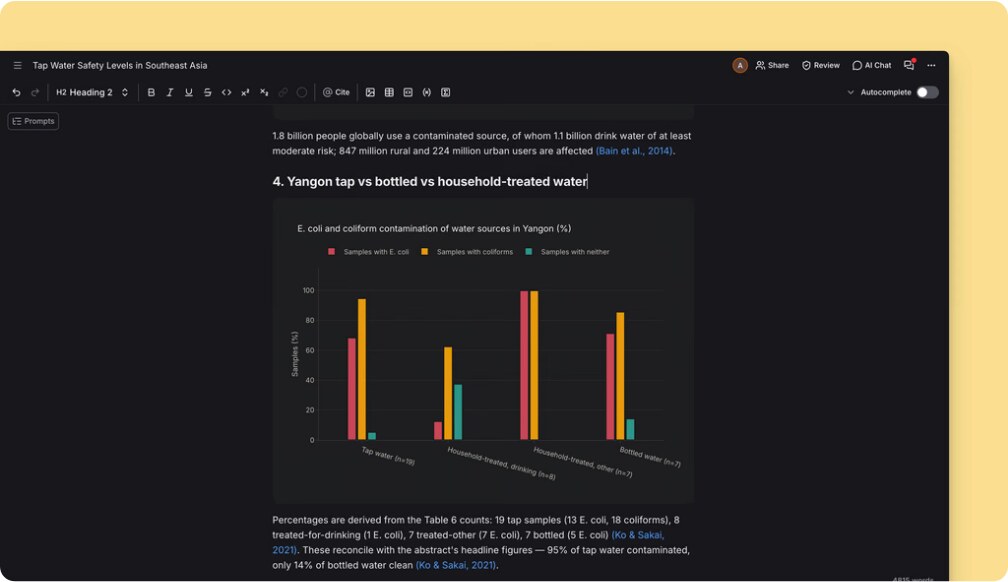
Jenni AI is an AI writing assistant built for academic writing. The tool combines a document editor, a research library and an AI chat, so you can read sources, write a paper and add citations in one place. The company describes it as "the AI workspace where researchers read, write, and cite, with every claim traceable to the source".
Jenni's main users are students, PhD candidates and academic researchers writing essays, literature reviews and research papers. If you need a general AI writer for marketing copy or blog posts, Jenni AI is the wrong fit; the whole writing tool is designed around sources and citations.
It is worth being clear about what a writing tool like this should be used for. Jenni AI helps you draft from your own sources, but your university's rules on AI use still apply, and the work you submit needs to be yours. Check your institution's policy before you rely on AI autocomplete for assessed work.
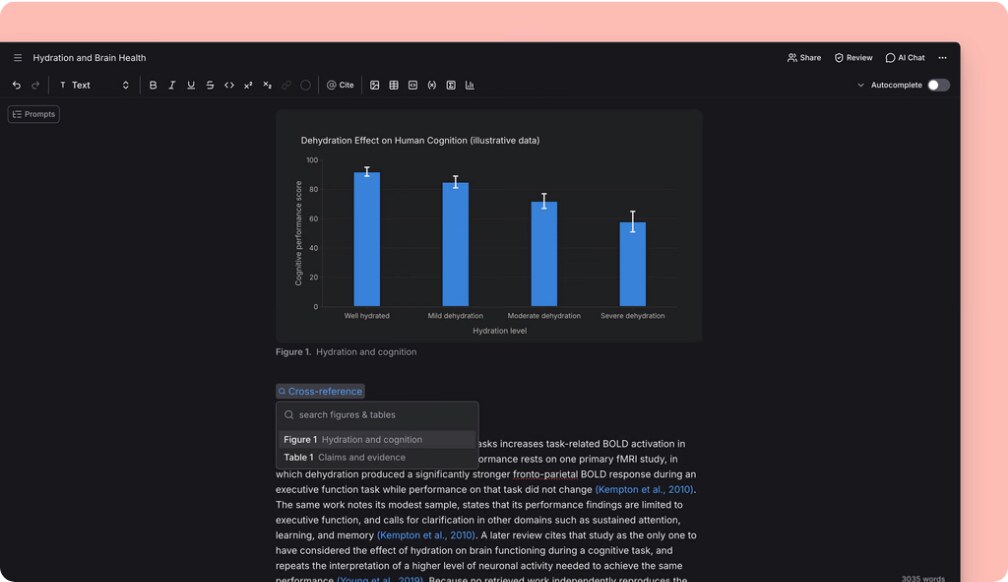
The core Jenni feature is AI autocomplete. As you write, Jenni suggests the next sentence, and the vendor says suggestions are cited and can be traced back to the source. You can set the autocomplete to draw only from your own curated library rather than from general training data, which gives you more control over what informs each section.
Jenni links AI-suggested sentences to the exact location in your source PDF, so you can check a claim with one click. Citations are inserted inline and the tool supports 10,000+ citation styles, including APA 7th, Chicago, Harvard, IEEE and Vancouver. Unlimited citations are available even on the free plan.
In Jenni you can drag in PDFs or import collections from Zotero and Mendeley. Jenni also searches what it describes as 200M+ academic papers (the search box mentions sources such as Semantic Scholar, PubMed, arXiv and CrossRef) and lets you open 10m+ open access full texts without leaving the editor. Library exports are available in .ris, .bib and .csv formats.
Jenni's AI chat is a built-in research assistant. It reads your library and current document, and answers with cited responses. You can use it to understand a methods section, compare findings across papers or find which source covers a concept. You can mention specific PDFs with @ and save prompts for reuse.
A newer Jenni feature called Reviews checks every claim in your paper against your sources and flags issues across six categories, such as unsupported or speculative claims, before you submit. Plans also include workflow runs, and the editor supports outlining, version history, a web extension and export to .docx, LaTeX or HTML.
Alongside the main editor, Jenni's site links to a set of smaller writing tools: a thesis statement generator, paraphrasing tool, AI essay outline generator, essay expander, sentence and paragraph expansion, an AI essay writer, a summarizer, a paragraph generator and a literature review generator. These are useful for a quick task, but the source-grounded editor is where Jenni differs from other AI writing tools. Tools that generate a whole essay from a prompt are also the ones most likely to cause trouble with academic integrity rules, so I would treat them with care.
Jenni AI has a free plan and two paid plans for generating and editing text. The difference between monthly and annual billing is large, so it matters which you choose. These are the US dollar prices on the pricing page today; the page says local currency pricing is available in the app.
| Plan | Monthly billing | Annual billing (per month) | Key limits |
|---|---|---|---|
| Free | $0 | $0 | 10 autocompletes a day, 10 PDF uploads, 3 AI edits, 5 AI chat messages, 3 reviews |
| Plus | $30 | $12 | 5,000 autocompletes, 500 AI edits and 500 AI chats a month, 10 reviews, unlimited uploads, live chat support |
| Pro | $73 | $29 | Unlimited autocomplete, edits, chat, reviews and workflow runs, priority support |
Other limits differ by plan too. PDF size is capped at 25MB on Free and 100MB on paid plans, and page count at 150 pages on Free, 500 on Plus and 1,000 on Pro. On the free plan, document export covers body content only.
No card is needed to start, and Jenni says you can cancel any time.
Jenni's strongest points are the citation workflow and the source-grounded writing. Being able to jump from a sentence to the exact paragraph in a PDF is useful for checking that a claim really says what you think it says, and the Zotero and Mendeley import saves time if your library already lives there.
The drawbacks are mostly about cost and limits:
For academic writing, Jenni AI is one of the more thoughtful AI writing tools available. The source-grounded autocomplete, page-level citation links, Zotero and Mendeley import and the claim-checking Reviews feature are aimed at the real problems of writing a research paper. I would pick Jenni on annual billing if you write papers regularly. I would avoid monthly billing unless you only need it for a short burst, and I would always check its suggestions against the original sources and your institution's AI rules.
Yes, there is a free plan with 10 AI autocompletes a day, 10 PDF uploads, 5 AI chat messages and unlimited citations. Paid plans start at $12 a month on annual billing.
Plus is $30 and Pro is $73 with monthly billing, or $12 and $29 a month with annual billing.
Jenni says its suggestions are cited and traceable to your source PDFs, and you can limit autocomplete to your own library. You should still check every citation against the original source.
Yes. You can import collections from Zotero and Mendeley as well as uploading PDFs directly.
You should use it if you are a student, PhD candidate or researcher who writes papers regularly. It is the wrong fit if you need a general AI writer for marketing copy or blog posts. Check your institution's AI policy before relying on it for assessed work.
Set a reminder before your renewal date if you pay annually. More than one Trustpilot reviewer complained that an annual subscription renewed or changed without notice. Jenni says you can cancel any time, and no card is needed to start.
We may earn a commission when you buy through links on SaaSPic. It never changes our verdicts or the price you pay. Affiliate disclosure
Add this badge to your website so your visitors can read this independent review in one click.
 7.6/10
AI academic writing tool with grammar, plagiarism, AI detection, citation and research features for students and researchers.
 7.6/10
AI research workspace for academics: search 300M+ papers, ask questions across your library and write with passage-level citations.
 6.9/10
AI academic writing assistant for essays, papers and theses, with autocomplete, citations in 700+ styles, plagiarism checks and PDF chat.
 7.6/10
AI research assistant for academics, with literature review, chat with PDF, data extraction, an AI writer and a credit-based research agent.
 7.4/10
AI tools for academic writing: reviewer-style feedback on drafts, article and journal suggestions, and a research workspace.
| Tool | Score | From | Free plan | Best for |
|---|---|---|---|---|
| Jenni AI | 7.4/10 | $30/mo | Yes | Students and researchers writing cited papers |
| Paperpal | 7.6/10 | £109/yr | Yes | Students and researchers polishing academic papers |
| Anara | 7.6/10 | $10/mo | Yes | Researchers running literature reviews across large paper libraries |
| Yomu AI | 6.9/10 | $21/mo | Yes | Students wanting AI help with essays and citations |
| SciSpace | 7.6/10 | $20/mo | Yes | Students and researchers speeding up literature reviews |
| Thesify | 7.4/10 | €149.95/yr | No | PhD students and researchers checking drafts before submission |
Pick Jenni AI if you want help getting words on the page: autocomplete, chat with your sources and citations as…
 7.7/10
AI detector and plagiarism checker for publishers and editors, with readability, grammar and fact checks in one scan.
 7.4/10
AI detector that flags text likely written by ChatGPT, Claude, Gemini and others, with writing replay, plagiarism checks and an API.
 7.3/10
AI content detector with plagiarism checking, AI image and deepfake detection, OCR and shareable reports.